


The Tiny Part That Prevents Big Problems: Why Indu...
29 Oct 2026
 MON to SAT - 8AM - 6PM

Oct
2026
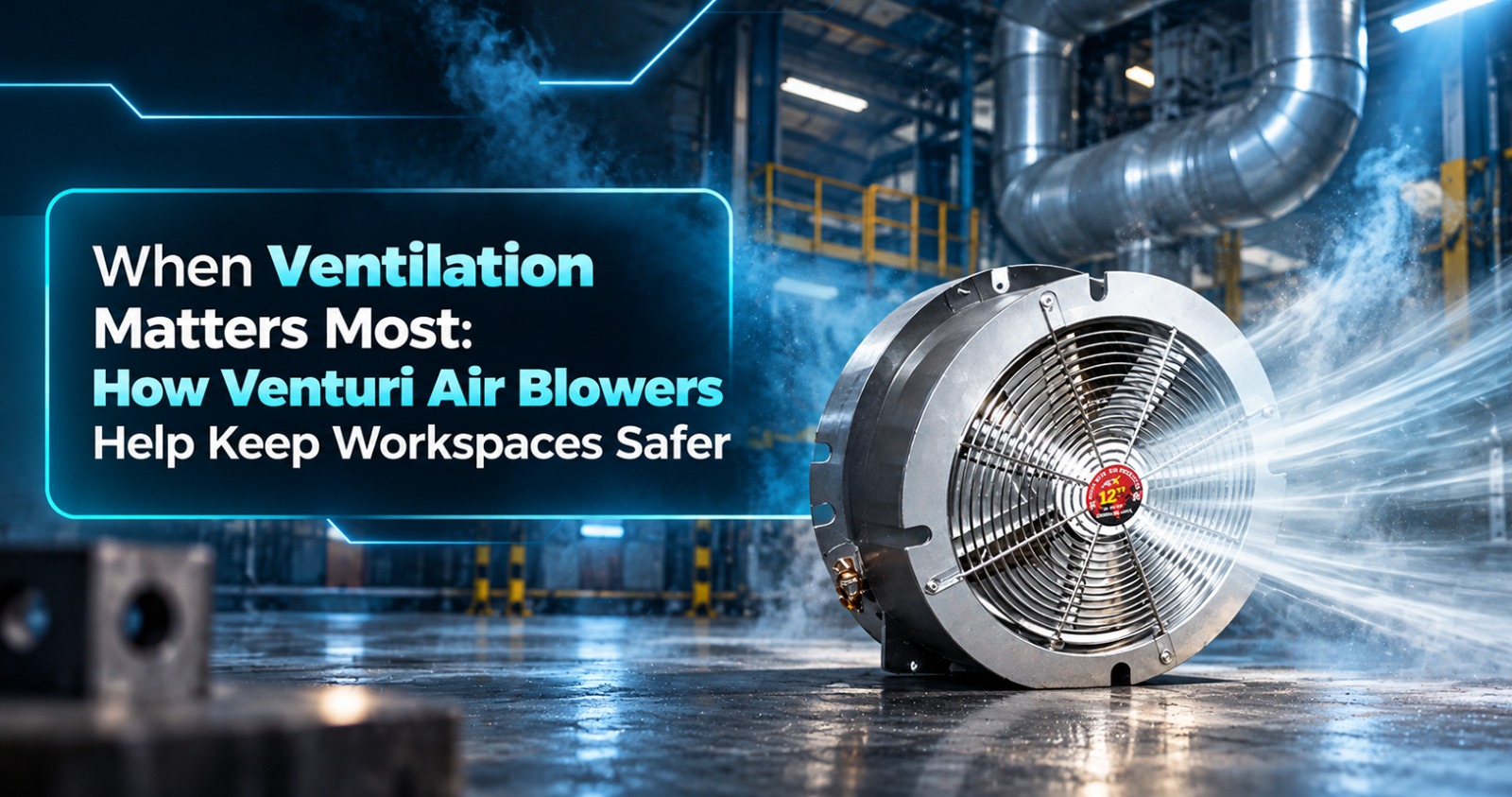
What if no one is aware that the air in your workplace is risking employees lives? Heat, trapped gases, and inadequate airflow can make everyday operations in industrial settings extremely dangerous. It can be challenging to move fresh air through these places, particularly in enclosed structures like tanks. Venturi air blowers are helpful in this situation. They use compressed air to improve airflow and remove unwanted fumes, making them a practical choice for many industrial ventilation needs.
There are frequent places in factories, chemical plants, shipyards, and oil and gas installations where fresh air cannot flow freely. Heat, fumes, and airborne pollutants can build up in tanks, pipelines, machinery enclosures, and cramped areas. Workers may feel uncomfortable or suffer significant health and safety risks without enough ventilation. Poor ventilation can make maintenance, cleaning, and inspection more difficult.
Effective ventilation helps to:
Compressed air is used by a Venturi blower to create airflow without the need for an internal electrically powered motor. Its velocity increases and creates a pressure difference that pulls surrounding air into the system as compressed air passes through a specially designed nozzle. The incoming air mixes with the compressed air and moves through the outlet. This operating principle offers several practical benefits, particularly in locations where conventional electrically powered ventilation equipment may be unsuitable.
The difficulties associated with ventilation vary by industry. Several of these can be addressed with an appropriate blower.
Inadequate airflow or unnecessary running expenses may arise from selecting equipment without considering your workplace's needs. Select a blower that meets your demands and saves money by looking at these details. This makes it simpler to find a blower that completes the task effectively and fits your area.
Safer working conditions, easier maintenance, and improved industrial environment control are all made possible by adequate ventilation. A crucial first step in obtaining these advantages is selecting equipment that is appropriate for your use. If you are looking for Venturi air blowers in the UAE, Jetblast International Equipment will assist you in finding industrial equipment that meets your operating needs. Consider your working environment, safety regulations, and ventilation requirements before making a decision. Your team can tackle challenging industrial tasks with the appropriate tools and safety procedures.
.png)
29 Oct 2026

15 Oct 2026
29 Sep 2026
23 Sep 2026

11 Sep 2026


