


Choosing the Right Garnet Abrasive for Blasting: A...
13 Jul 2026
 MON to SAT - 8AM - 6PM
Jul
2026
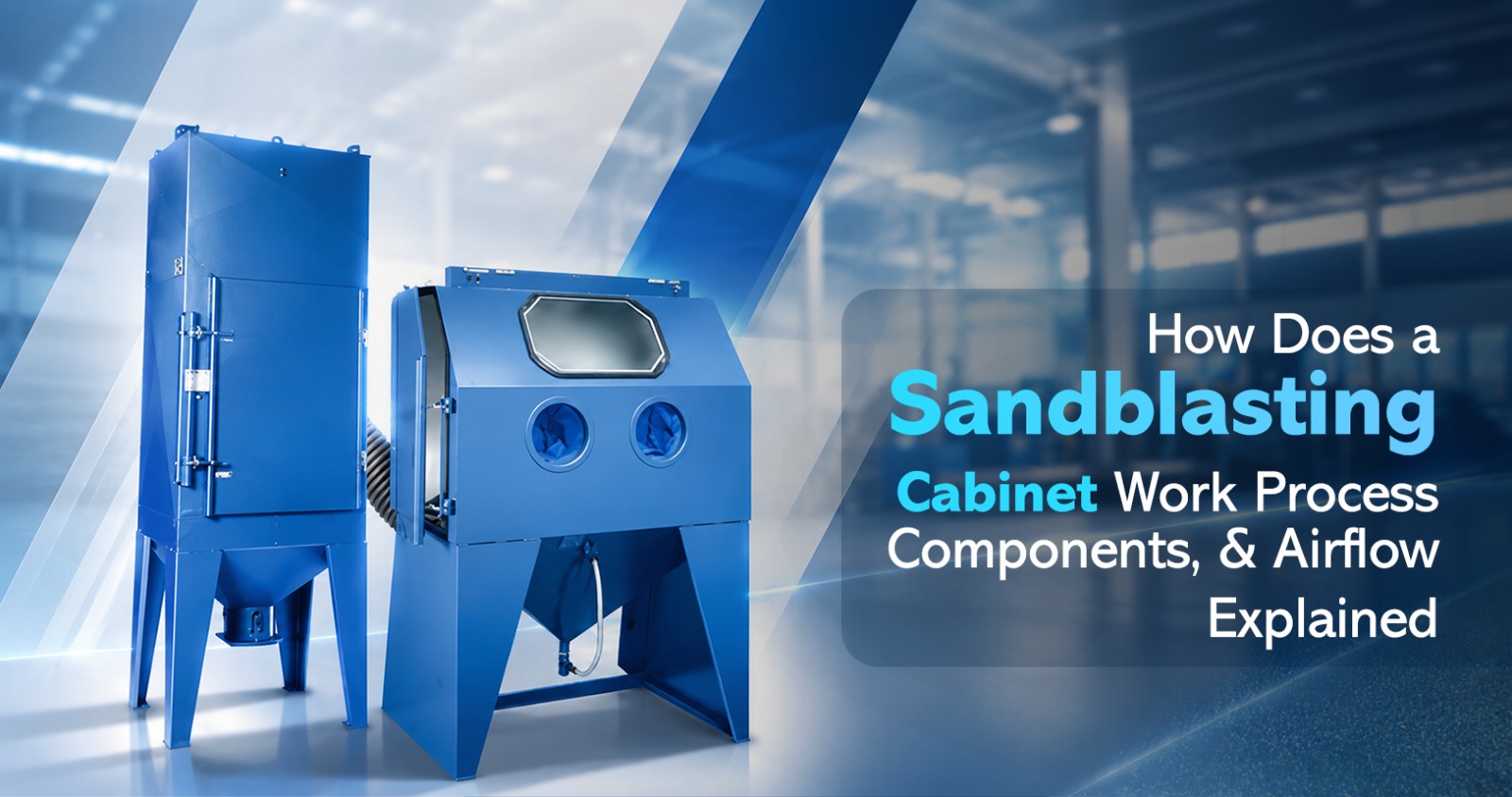
A sand blasting cabinet is one of the most capable tools to remove rust, prepare surfaces for painting, or restore metal parts. It delivers fast, consistent surface preparation while keeping dust and abrasive media safely contained inside an enclosed workspace. But have you ever wondered what actually happens inside the cabinet from the moment you pull the trigger?
By knowing how the sand blasting cabinet works, you can select a suitable sand blasting machine, optimize the blasting efficiency, and prolong the life of the blasting machine. We can go through the entire blasting procedure, discuss the parts, and demonstrate how airflow keeps the whole system running smoothly.
A sand blasting cabinet is an enclosed cabinet that uses the high velocity impact of the abrasive material to clean surfaces from rust, paint, scale, or old coating. The operator is protected from dust and flying particles as everything takes place in a closed cabinet, and the workspace remains clean.
This makes it an ideal selection for people who are looking for a dependable sandblasting cabinet that UAE companies can rely on, particularly in sectors such as vehicle repair, metal work, and marine maintenance, which normally require rapid and consistent surface preparation.
The following are the 7 steps of the sandblasting process. This process continues until the surface is thoroughly cleaned or ready for coating.
When selecting the sandblasting cabinet that is suitable for your application, knowing the major sandblasting cabinet components can be helpful. Each part plays a role in keeping the process efficient, safe, and consistent.
The essence of a sand blasting cabinet is airflow. If there is no airflow, dust will accumulate rapidly, which will obscure the system and decrease visibility. This continuous air flow cycle lets the operators operate without stopping to remove the dust manually. The process is as follows:
The abrasive has an impact on the finish of the job as well as how fast the job is performed. Coarse glass beads are more effective on heavy rust or scale, whereas thin beads are gentler and more suited for delicate surfaces. Successful collaboration with a trusted sandblasting material supplier can directly impact blasting results and equipment life, so as to verify that the blasting material is of uniform quality.
Working with an experienced blasting cabinet supplier that Dubai professionals trust can save time and reduce guesswork. A good supplier helps you match cabinet size, air pressure, and abrasive type to your application, whether that's automotive restoration, industrial cleaning, or metal fabrication.
While a sand blasting cabinet might seem like a basic item, it requires a seamless sequence of air flow, abrasive movement, and dust collection to produce clean, consistent sand blasting. Knowing how the components work in conjunction helps determine the suitable cabinet and maintain it appropriately for long service life.
If you're looking for a trusted blasting cabinet supplier in Dubai, Jetblast International Equipment offers the top range of sandblasting cabinets, accessories, and abrasive supplies designed for modern workshops across the UAE. It doesn't matter if you are starting out or upgrading; a good partnership with the right equipment is the key to a successful, efficient project that produces professional results.

13 Jul 2026

25 Jun 2026

17 Jun 2026

08 Jun 2026

29 May 2026


